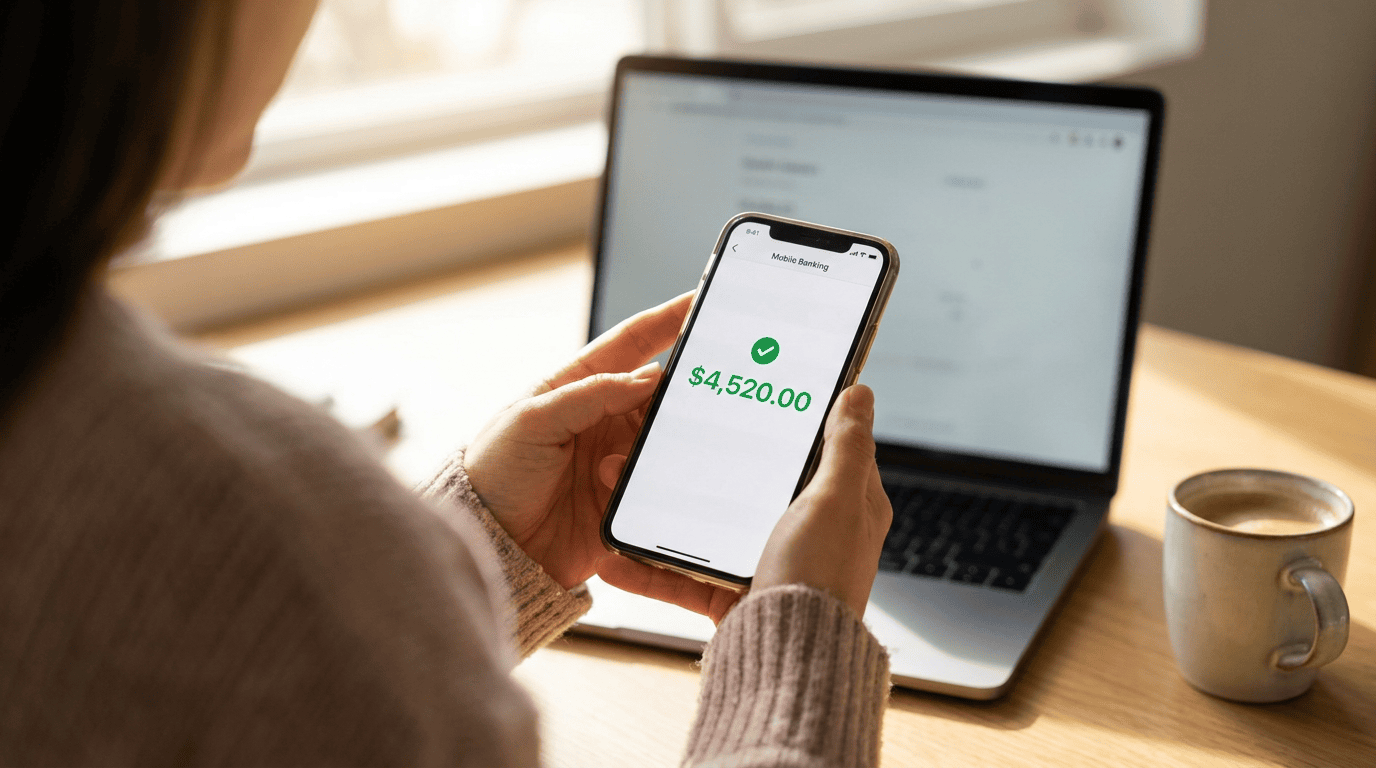
I remember when Cash App was just a quick way to split a pizza bill with friends. Fast forward to 2026, and after spending the last month making it my primary financial home, I can confidently tell you in this Cash App review that the app has grown into a certified financial powerhouse.
As a digital banking reporter who installs and tests dozens of financial apps practically every single week, I’ve watched this platform evolve from a simple payment utility into a sprawling financial ecosystem. Today, you can do nearly everything your traditional bank allows, plus quite a bit more, all from a sleek, neon-tinged interface on your smartphone.
Whether you are looking to dip your toes into the stock market, send money to family, borrow a little extra cash before payday, or stash away funds for a rainy day, Cash App covers an astonishing amount of ground. It isn’t completely without its quirks and limitations, though.
After putting every single feature through its paces, from direct deposit to the new 2026 premium tiers, conducting this comprehensive Cash App review revealed that this platform is best suited for the mobile-first everyday spender. If you want all your spending, sending, and entry-level investing consolidated under a single, highly intuitive digital roof, here is everything you need to know.
Table of Contents
Cash App: Best for Payments and Investing
Cash App is the most versatile money app I have tested: fast peer-to-peer payments, a free Cash Card with Boosts, plus stocks and Bitcoin investing from $1. Best as a flexible everyday spending and investing hub.
Get Cash App →What Is Cash App and Who Is It For? – A Cash App review
Cash App is the flagship consumer product made by Block, Inc., the massive monetary technology company formerly known as Square. What began as a straightforward way to move funds between peers has morphed into a comprehensive, all-in-one money app.
Today, it is designed to help you send, spend, store, and invest your funds securely from your pocket. In doing this Cash App review, I found every feature feels incredibly intentional, blending the breezy social elements of modern fintech with actual, tangible banking utility.
So, who is the ideal user here? If you are tired of logging into three different applications to check your checking account balance, buy a fraction of a tech stock, and pay a friend back for concert tickets, Cash App is practically tailor-made for you.
It appeals heavily to younger demographics, freelancers, and gig workers who appreciate having their direct deposits land natively in the same place they manage their daily budget. However, if you are seeking complex wealth management tools, shared family finances, or a full-fledged high-yield savings account that rivals traditional online banks, you might bump into a few of Cash App’s intentional boundaries.
It is undeniably brilliant for managing personal cash flow. However, wrapping up this section of our Cash App review requires an understanding of what it is – and what it isn’t.
Cash App Core Features – A Cash App review
The true magic of Cash App lies in how seamlessly its core components talk to one another. During my hands-on testing, I was constantly impressed by the lack of friction when moving my money from a savings bucket directly to a friend, or from my main balance into an investment.

Sending and Receiving Money
At the absolute center of the app’s universe is its peer-to-peer payments system. Simply put, sending and receiving money here is a joy, which is a big positive in our Cash App review. The entire experience relies on your $Cashtag, a unique username that acts as your digital financial identity. You don’t need to hand out your routing number or email address; you just share your $Cashtag, and money can change hands instantly.
In my everyday use, the mobile wallet functionality worked flawlessly, whether I was tipping a local artist or splitting a grocery run. What really stands out in 2026, however, are the new additions to this core functionality.
Cash App has officially integrated the ability to send and receive stablecoins, allowing users to transact in digital currency that holds a steady value. This integration was vital to mention for this Cash App review. Furthermore, the platform has rolled out Bitcoin Payments with USD over the Lightning Network.
This sounds incredibly technical, but the reality is beautifully simple: it allows for phenomenally fast, low-cost transfers over a robust network, moving USD behind the scenes almost instantly. It is clear that the developers are looking to make cross-border and next-generation payments as easy as sending a quick text message.
The Cash Card and Boosts
Having a digital balance is great, but getting your money out into the real world is where the Cash Card comes in. The Cash Card is a free Visa debit card linked directly to your app balance.
Ordering mine was a surprisingly fun process because the app allows you to heavily personalize the physical card. You can draw on it, add stamps, and truly make it your own before it arrives in your mailbox.
But the Cash Card isn’t just a piece of pretty plastic; it is packed with real utility. The standout feature here is called Boosts. These are instant discounts that you apply directly in the app before you swipe your card at selected merchants. When I applied a coffee shop Boost, the discount was taken off immediately at the point of sale – no waiting around for cash back to settle at the end of the month.
I was also thrilled to see a highly anticipated 2026 feature finally go live: Afterpay on the Cash App Card. Because Block owns Afterpay, you can now seamlessly elect to pay over time for larger purchases right from your debit card, giving you incredible flexibility when budgeting for big-ticket items without having to open a new line of credit somewhere else. This flexibility is a huge perk, but as we transition to the next part of this Cash App review, we must also look closely at fees.
Cash App Fees: What to Watch For
As a financial reporter, I always look closely at the fine print. Fortunately, Cash App is generally highly transparent about its pricing model. It is completely free to download, completely free to create an account, and notably devoid of any pesky monthly maintenance fees just to keep the lights on.
When you want to pull your money out of the app and into a traditional, external checking account, standard bank transfers are completely free. You do have to wait the customary one to three business days for the funds to clear.
If you are in a rush and need your cash immediately, Cash App offers an instant transfer to a linked debit card or bank account. This speed comes at a premium, carrying a small fee calculated as a percentage of the transfer amount. Checking fee structures is a vital part of our Cash App review.
ATM access is another area where you need to pay attention to the rules. Cash App will actively reimburse your in-network ATM fees, but only if you meet specific behavioral criteria. To get those fees waived, you must either receive at least $300 in qualifying direct deposits per month or spend $500 or more in qualifying purchases within a calendar month.
If you meet neither, you are on the hook for the ATM operator fees. However, power users in 2026 might find themselves automatically exempt through the new tiered loyalty system, which completely removes these conditional hoops for top-tier users.
Cash App Investing: Stocks and Bitcoin
For many users, Cash App serves as their very first bridge into the world of investing. The investing interface is intentionally stripped down, avoiding the overwhelming charts and jargon found in dedicated brokerage platforms. You can browse popular companies, track fundamental market movements, and instantly purchase stocks with as little as $1.

This fractional share model is fantastic; it means you can own a tiny slice of an expensive tech company even if you are just investing your leftover coffee money. Best of all, stock trading on the platform is completely commission-free.
Beyond traditional stocks, Cash App remains one of the easiest places on the internet to buy and sell Bitcoin. You can dip in with very small amounts, and watch your portfolio’s performance natively alongside your daily spending.
However, my hands-on reporting demands a strong note of caution here: it is vital to remember that investing carries inherent risk. Unlike your standard cash balance, your investments in stocks and Bitcoin are absolutely NOT FDIC insured.
The stock market fluctuates, and crypto markets are famously volatile. While the app makes buying assets feel as easy as sending a text message, you must understand that your principal investment can lose value.
Savings, Direct Deposit, and Borrow
Over the last year, Cash App has made a concentrated push to convince users to hold their wealth within the app, rolling out a dedicated Savings feature. It is incredibly satisfying to set up financial goals and slide money into the Savings tab. The Savings feature can also earn you interest over time, letting your money gently grow in the background.
That said, I have to be honest: this is not a traditional high-yield savings account (HYSA). If your ultimate goal is to chase the absolute highest market interest rates for a massive block of emergency cash, a dedicated online bank might still serve you better.
However, Cash App fundamentally changed this dynamic in 2026 with the introduction of actual premium tiers. A newly launched premium “Green status” rewards the platform’s most loyal users. Achieving Green status unlocks a significantly higher interest rate on your savings, entirely waives in-network ATM fees without making you hit monthly spending quotas, and grants you access to exclusive, weekly personalized Boosts.
During my Cash App review, I found it is essentially a VIP club for users who make this their primary financial hub. If you decide to go all-in, setting up direct deposit is a breeze. When you route your paycheck into Cash App, you can get paid up to two days early compared to traditional banks that hold funds during processing. This early access to your actual hard-earned money can be a lifesaver when rent is due.
Finally, there is the Borrow feature. For eligible users – based on an algorithmic review of your app activity and direct deposit history – Cash App offers short-term, small-dollar borrowing. It is designed to act as a micro-loan to bridge the gap until your next payday. Both the availability of Borrow and the specific amounts offered vary wildly from person to person, but when available, it represents a much safer alternative to predatory payday loans.
Is Cash App Safe? FDIC and Security
One of the most frequent questions I receive from readers involves the safety of modern fintech apps. When you are tapping a screen instead of walking into a brick-and-mortar lobby, security questions are natural.
Cash App takes security incredibly seriously, utilizing heavy encryption and offering security locks like PINs and biometric authentication natively inside the app. More importantly, real systemic safety comes down to insurance.
While the technology company itself is not a bank, its banking services and your main Cash App balance are provided and held through partner banks, most notably Sutton Bank. Because of this partnership, your standard cash balance is subject to pass-through FDIC insurance up to $250,000, provided that eligibility conditions are met (such as obtaining an active Cash Card).
This means if the partner bank were to theoretically fail, the federal government protects your everyday spending cash. I must reiterate, however, that this FDIC safety net applies exclusively to your USD cash balances.
The stocks and Bitcoin you hold in the investment side of the app represent market assets, and they are entirely uninsured by the FDIC. This insurance detail is a crucial finding in our Cash App review.
Cash App Pros and Cons
Pros
Free to use, no monthly account fee
Free Cash Card with Boosts discounts
Invest in stocks and Bitcoin from $1
Fast P2P payments via your $Cashtag
Get paid up to 2 days early
New: Afterpay and Bitcoin Lightning payments
Cons
Not a true high-yield savings account
Instant transfers carry a fee
Best ATM perks require Green status
No joint accounts
Investing always carries risk
Cash App Specifications
| Type | Fintech money app (Block, Inc.) |
| Peer-to-peer payments | Yes (via $Cashtag) |
| Debit card | Cash Card (Visa, free, personalizable) |
| Direct deposit | Up to 2 days early |
| Savings | Earns interest (higher with Green); not high-yield |
| Investing | Stocks (from $1) and Bitcoin |
| ATM fees | Reimbursed with $300+ deposits or $500+ spend; free with Green |
| Borrow | Available to eligible users |
| FDIC insurance | Via partner banks (e.g. Sutton Bank), up to $250k |
| Mobile app | iOS & Android |
Who Should Use Cash App?
From my perspective, Cash App is a massive win for young professionals, freelancers, college students, and anybody who finds modern banking excessively complicated. It acts as an incredible digital control center.
If you want a mobile wallet that allows for instantaneous peer-to-peer payments, fun and custom-designed debit cards, easily accessible fractional investing, and early access to your paycheck, this app executes that specific vision flawlessly. You should, however, temper your expectations if your needs are more complex.
As of 2026, Cash App still does not natively support joint accounts. If you are managing household finances with a spouse, the solo nature of the app creates frustrating roadblocks. Additionally, the increasing reliance on “Green status” to unlock the absolute best perks means that casual users who only open the app occasionally might feel slightly gated off from the platform’s full potential.
Final Verdict: Is Cash App Worth It in 2026?
After countless transactions, ATM visits, stock purchases, and early paydays, my verdict is an enthusiastic yes – with just a couple of rational asterisks. The sheer convenience of Block’s financial ecosystem is practically unmatched in the modern fintech landscape. To conclude this Cash App review, the 2026 additions of stablecoin support, Lightning Network capabilities, and Afterpay integration make the Cash Card an incredibly potent tool in your wallet.
As long as you are comfortable with the fact that its savings features are not a complete replacement for a traditional high-yield savings account, and you recognize the inherent risks in the frictionless stock and crypto portals, Cash App is an exceptional everyday digital companion. It remains securely at the top of its class, transforming your smartphone into a sleek, fast, and remarkably capable modern bank branch.
Frequently Asked Questions
Is Cash App safe to use?
Yes, Cash App is highly secure, utilizing modern encryption and biometric tools to protect your account. For your actual money, Cash App partners with traditional financial institutions like Sutton Bank to hold your everyday cash safely, ensuring the platform meets strict federal regulatory standards for moving and storing your funds.
Does Cash App charge fees?
Downloading the app and maintaining your account is entirely free, with no monthly maintenance fees. Standard bank transfers are also free, but if you want to instantly transfer your balance to a linked debit card, you will pay a small fee based on a percentage of the amount.
Can you really invest in stocks and Bitcoin on Cash App?
Absolutely. Cash App offers a highly streamlined investing platform where you can purchase fractional shares of popular stocks with as little as $1, completely commission-free. The app also features a robust portal for buying and selling Bitcoin, making it incredibly accessible for beginners.
Is money on Cash App FDIC insured?
Your standard Cash App balance is FDIC insured up to $250,000 through the company’s partner banks, such as Sutton Bank, provided you meet certain eligibility criteria like having a Cash Card. However, it is vital to remember that any money placed into stocks or Bitcoin is not insured and carries the risk of market loss.
What is Cash App Green status?
Introduced in 2026, Green status is a premium tier that rewards Cash App’s most engaged users. It unlocks several highly requested perks, including a significantly higher interest rate on your savings balance, the complete removal of in-network ATM fees, and exclusive access to personalized weekly Boost discounts.