Savers finally have a good problem again. With the federal funds rate parked at 3.50% to 3.75% and the best online banks still paying around 4% on cash, the real question is no longer whether to move your money out of a 0.01% checking account. It is which home deserves it. And for most people, that decision comes down to a classic matchup: money market account vs high yield savings.
The two products look nearly identical from a distance. Both are federally insured deposit accounts. Both pay variable rates that sit far above the national average. Both are built for money you want safe and reachable. The differences hide in the details: how you access the cash, what balance the best rates require, and which product actually pays more right now.
I compared the top accounts in both categories, at August 2026 rates, so you can pick the right one in about ten minutes.
Quick answer
Choose a high yield savings account if you simply want the best rate on cash you rarely touch: top HYSAs pay up to 4.21% APY with no checks attached. Choose a money market account if you want to write checks or swipe a debit card straight from your savings: the best MMAs pay up to 4.00% APY. The rate gap between the two leaders is small, so access, minimums, and fees should make the call.
Key takeaways
- Top money market accounts pay up to 4.00% APY in August 2026, against a national average of just 0.45%.
- Top high yield savings accounts pay slightly more, up to 4.21% APY, though the highest rates often carry activity or balance requirements.
- Money market accounts add check writing and, at many banks, a debit card. High yield savings accounts usually move money by transfer only.
- Both are insured up to $250,000 per depositor, per bank, by the FDIC or NCUA. A money market fund from a brokerage is a different product and carries no such insurance.
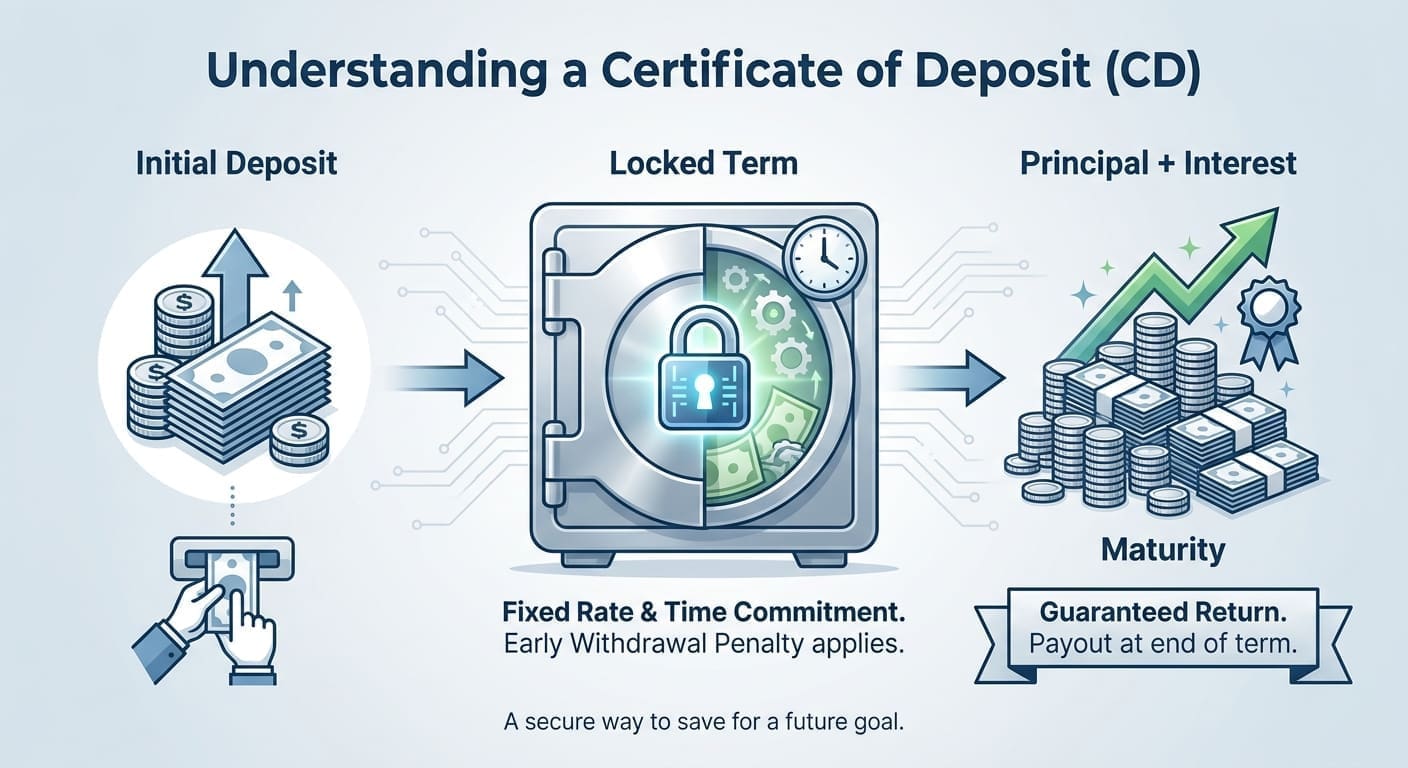
- Rates on both are variable. With markets now expecting the Fed’s next move could be a hike, neither product locks anything in: that is what CDs are for.
Table of contents
- What is a money market account?
- What is a high yield savings account?
- Money market account vs high yield savings: head to head
- Where rates stand in August 2026
- When the money market account wins
- When high yield savings wins
- Do not confuse either with a money market fund
- How to choose in four steps
- Frequently asked questions
- Bottom line
What is a money market account?
A money market account, often shortened to MMA, is a savings deposit account that borrows a few features from checking. You earn a variable interest rate on your balance, and in exchange for keeping the money at the bank, most MMAs let you write a limited number of checks or spend directly with a debit card.
That hybrid design is the whole pitch. Your emergency fund can sit there earning a real yield, and if the roof leaks, you can hand the contractor a check from the account itself instead of shuffling money to checking first and waiting on a transfer.
Two quirks come with the format. First, minimums run higher than on ordinary savings accounts: some of the best MMAs open with $100, but plenty of banks reserve their advertised rate for balances of $1,000 or more. Second, many banks still cap convenient withdrawals at around six per statement cycle. The federal rule that once forced that limit, Regulation D, was relaxed in 2020, but banks are free to keep their own caps, and many did.
Like any bank savings product, a money market account at an FDIC member bank is insured up to $250,000 per depositor, per bank, per ownership category. You can verify any bank’s status directly through the FDIC’s deposit insurance resources. Credit unions offer the same protection through the NCUA.
What is a high yield savings account?
A high yield savings account is a plain savings account with an honest interest rate. It is the product that online banks used to break the industry: no branches, low overhead, and the savings passed on as yield that is often ten times the national average. We cover the mechanics in detail in our guide to what a high yield savings account is, but the short version is simple: you park cash, it compounds, you move it by electronic transfer when you need it.
What you give up is transaction access. Almost no HYSA writes checks, and debit cards are rare. Getting money out means an online transfer to a linked checking account, which typically lands the same day or within one business day at the same bank, or in one to three business days between banks.
If you want to understand exactly how the advertised number turns into dollars, our explainer on how APY works walks through the compounding math with real figures.
Money market account vs high yield savings: head to head
Here is how the two products compare on the points that actually change your outcome.
| Feature | Money market account | High yield savings |
|---|---|---|
| Top APY (Aug 2026) | Up to 4.00% | Up to 4.21% |
| National average | 0.45% | 0.38% |
| Check writing | Yes, usually limited | No |
| Debit or ATM card | Often | Rare |
| Typical minimum for best rate | $100 to $1,000+ | Often $0 |
| Monthly withdrawal caps | Common, about 6 | Sometimes, about 6 |
| Rate type | Variable | Variable |
| Federal insurance | FDIC or NCUA, $250,000 | FDIC or NCUA, $250,000 |
Read that table twice and a pattern appears: the high yield savings account is the purer rate play, while the money market account trades a little yield ceiling for a lot of flexibility. Neither product beats the other everywhere, which is exactly why both still exist.
Where rates stand in August 2026
TOP MONEY MARKET APY
4.00%
Bank5 Connect, $100 minimum
TOP HIGH YIELD SAVINGS APY
4.21%
Axos Bank, with activity requirements
FED FUNDS TARGET RANGE
3.50% to 3.75%
Held steady for five straight meetings
Among money market accounts, Bank5 Connect leads at 4.00% APY with a $100 minimum, followed by Zynlo Bank at 3.90% with no minimum and Quontic Bank at 3.80% with $100. On the savings side, Axos Bank tops the charts at 4.21% APY, but only for customers who keep a $1,500 average balance with linked checking and monthly deposits. Forbright Bank pays up to 4.15% with a $1,000 minimum, and several banks sit at a cleaner 4.01% with no strings.
Strip away the conditional leaders and the honest gap between the best simple HYSA and the best simple MMA is roughly zero to a quarter of a percentage point. On a $10,000 balance, a 0.20% difference is about $20 a year: real money, but not enough to outweigh a feature you will actually use.
The rate backdrop matters too. The Fed has held its target range at 3.50% to 3.75% for five consecutive meetings, and with inflation still running above target, markets now assign strong odds to a hike rather than a cut at the September meeting. Variable-rate accounts like these would ride any increase upward. If you would rather lock today’s yield for years, that is the job of a certificate of deposit, and our walkthrough on building a CD ladder shows how to do it without freezing all your cash.
We track the wider market in our roundup of current savings account rates, which is refreshed as banks move.
When the money market account wins
A money market account earns its keep whenever the ability to spend directly from savings saves you a step that matters.
- You pay big, irregular bills from savings. Property taxes, insurance premiums, tuition, a contractor. One check from the MMA replaces a transfer, a wait, and a second transaction.
- You want emergency money with a card attached. In a genuine emergency, an ATM withdrawal at 2 a.m. beats a one-day transfer. Pair the account with our emergency fund calculator to size the balance first.
- You keep a five-figure cash buffer. MMA minimums stop being a drawback once your balance clears them comfortably, and check access on a large balance is genuinely useful.
- You are consolidating away from a checking account that pays nothing. Some savers use a high-rate MMA as a near-checking hub for everything except daily spending.
When high yield savings wins
The high yield savings account is the better default for most savers, for reasons that compound quietly.
- You want the top rate with zero conditions. No-minimum HYSAs paying about 4% are easy to find. No-minimum MMAs at that level are scarcer.
- You are starting small. With $500 or $1,000, HYSA rates apply from the first dollar, while many MMAs reserve their best tier for bigger balances.
- You want friction, on purpose. No card and no checkbook means impulse spending has to survive a transfer delay. For a goal like a house down payment, that barrier is a feature, not a bug.
- You bank with a digital-first institution. Online banks lead this category, and the difference in rates against branch banks is dramatic; our comparison of digital and traditional banks shows why the gap exists.
Whichever side you lean toward, run your own numbers in our free savings calculator or the compound interest calculator: seeing your actual balance grow at 4% is more persuasive than any table.
Do not confuse either with a money market fund
Important distinction: a money market account is a bank deposit protected by federal insurance. A money market fund is a mutual fund sold by brokerages. Funds usually hold very safe short-term debt and often pay competitive yields, but they are investments, not deposits: they carry no FDIC or NCUA insurance, and their value is not guaranteed by the government.
The nearly identical names cause real mistakes. If the product lives at a brokerage and quotes a “7-day yield,” it is a fund. If it lives at a bank, quotes an APY, and shows up in FDIC records, it is an account. Everything in this comparison refers to the insured bank product.
How to choose in four steps
Step 1: Decide how you will take money out. If you can name a purchase you would pay by check or card from savings in the next year, shortlist money market accounts. If every exit is a transfer anyway, shortlist HYSAs.
Step 2: Check the rate at YOUR balance. Ignore the headline number and read the tier table. A 4.00% rate that starts at $1,000 pays you nothing extra on a $600 balance.
Step 3: Scan for fees and caps. A $10 monthly maintenance fee erases the entire annual yield on a $3,000 balance at 4%. Confirm the fee waiver rules and the monthly withdrawal cap before opening.
Step 4: Confirm the insurance. Look the bank up in the FDIC’s BankFind tool, or the credit union in the NCUA’s directory, and keep any single-bank balance under $250,000.
Frequently asked questions
Is a money market account better than a high yield savings account?
Neither is universally better. High yield savings accounts currently edge out money market accounts on headline rates, up to 4.21% against 4.00% APY, and demand lower minimums. Money market accounts add check writing and often a debit card. Pick based on how you plan to withdraw, not on a 0.2 point rate gap.
Are money market accounts FDIC insured?
Yes. A money market account at an FDIC member bank is insured up to $250,000 per depositor, per bank, per ownership category, exactly like a savings account. Credit union versions carry equivalent NCUA coverage. Money market funds from brokerages are not insured.
Can you lose money in a money market account or HYSA?
Your principal cannot shrink from market moves in either account, and federal insurance protects it if the bank fails, up to the limit. The realistic risks are fees eating your interest and inflation outpacing your rate, both worth checking before you open.
How many withdrawals do these accounts allow per month?
The old federal six-per-month rule was suspended in 2020, but many banks kept a cap of about six convenient withdrawals per statement cycle on both money market and savings accounts. Exceeding it usually triggers a fee, and repeat offenses can get the account converted to checking. Read your bank’s specific policy.
Will these rates go up or down from here?
Both products carry variable rates that track the Federal Reserve. As of August 2026 the Fed has held its range at 3.50% to 3.75% for five meetings, and markets lean toward a possible hike next. If rates rise, banks typically lift MMA and HYSA yields; if cuts return, yields fall with them. Only CDs lock a rate.
Bottom line
The money market account vs high yield savings decision is closer than the marketing suggests, because both products share the same DNA: federally insured cash earning roughly 4% at the best online banks in 2026. Default to a high yield savings account if your only goal is the strongest simple rate from the first dollar. Upgrade to a money market account if writing checks or carrying a card against your savings would genuinely simplify your life, and your balance clears the minimums. Then stop optimizing: at today’s rates, the expensive mistake is not choosing the wrong one of these two, it is leaving your cash in an account paying 0.01% while you decide.