Quick answer: High-yield savings account rates are moving fast. The Fed raised its benchmark rate a quarter point to 3.75% to 4.00% on September 16. Online savings accounts usually reprice within 3 to 10 business days, and several already pay over 4% APY, so the fastest way to benefit is to move idle cash out of a low-rate account now rather than wait for your current bank to catch up.
The Federal Reserve raised its benchmark interest rate by a quarter point on September 16, pushing the federal funds target range to 3.75% to 4.00%. It is the first increase since 2023, and it changes the math for anyone sitting on cash in a savings account.
If your money is still parked at a traditional bank earning close to nothing, this is the moment that gap gets expensive. The national average savings rate sits well under 1%, while the best online accounts already pay 4% APY or more. That spread was already large before this week. It just got a reason to widen further.
Here is what actually changed, which accounts are already paying up, and the three moves worth making before the rest of the market catches up.
Key takeaways
- ✓The Fed hiked its target rate a quarter point to 3.75% to 4.00% on September 16, the first increase since 2023.
- ✓Online savings accounts typically reprice within 3 to 10 business days. Big traditional banks are usually slower, or skip the increase entirely.
- ✓Several online banks already pay north of 4% APY, more than ten times the national average.
- ✓Fixed-rate CDs let you lock in today’s yield for months or years, which matters if the Fed reverses course later.
What the Fed Actually Just Did
The Federal Open Market Committee voted unanimously, 12 to 0, to raise its benchmark rate by 25 basis points. The committee pointed to persistent pressure in energy and consumer prices as the reason, even while describing the broader economy as expanding at a solid pace. Officials said future moves will stay data-dependent, which is Fed language for “we are not promising anything about the next meeting.”
For the full statement, see the Federal Reserve’s official press release.
This matters for savers because it reverses a run of five straight holds earlier in the year. A hike, especially an unexpected one, tends to pull deposit rates up faster than a hold does. Banks that were already competing for deposits now have a fresh reason to bid a little higher.
Why Your Bank Account Won’t Move Overnight
A Fed decision is not a switch that flips every account balance at once. Savings and money market rates are variable, which means the bank chooses when and by how much to adjust them. Online-only banks, which compete almost entirely on rate, tend to move within 3 to 10 business days of an announcement.
That lag is precisely why shopping high-yield savings account rates directly, instead of waiting on your branch, pays off.
Large brick-and-mortar banks are a different story. Many still pay a fraction of a percent regardless of what the Fed does, because most of their customers never shop around. If your money is sitting at one of those banks, a Fed hike changes nothing until you move it.
Worth checking today: log into your current savings account and look at the actual APY on your last statement, not the rate you remember opening the account at. Introductory rates often expire quietly.
The Best High-Yield Savings Account Rates Right Now
Rates change often enough that any list is a snapshot, not a permanent ranking. Here is where several well-known online accounts stood as this article was published.
Notice the pattern: every one of these is an online-first account. That is not a coincidence. Digital banks carry lower overhead than a branch network, and they pass more of that savings back as yield.

Neobank Savings: Read the Fine Print on FDIC Coverage
A neobank like Chime is not a bank in the legal sense. It is a technology company that partners with an FDIC-insured bank to actually hold the money. Chime, for example, routes deposits through The Bancorp Bank or Stride Bank, both FDIC members.
Even so, high-yield savings account rates from a well-run neobank are often worth the extra diligence.
That distinction matters for one reason: FDIC coverage of $250,000 per depositor applies per ownership category, per insured bank. If you spread money across two neobanks that both route through the same underlying partner bank, you may have less separate coverage than you think. Always check which bank actually holds the deposits before assuming your full balance is covered twice over.
- ✓Look for the phrase “Member FDIC” and the specific partner bank’s name, usually in the account disclosures or footer.
- ✓A high advertised APY that requires “qualifying direct deposit” often drops sharply without it. Read the qualifying conditions before you switch.
- ✓Promotional rates on savings accounts commonly last 3 to 6 months, then fall to a lower standard rate.
Savings Account or CD? What This Rate Move Changes
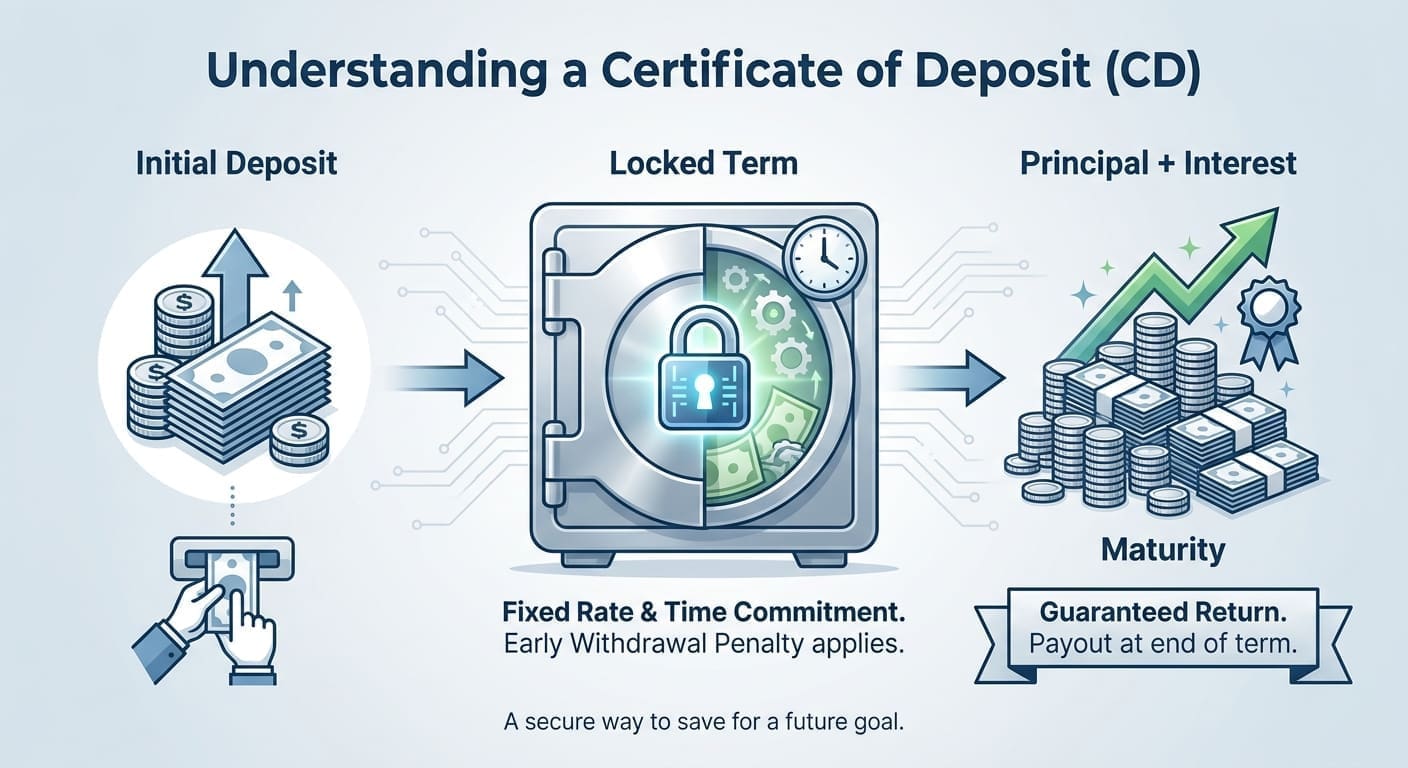
A high-yield savings account has a variable rate. It rides the Fed up and, eventually, down again. A certificate of deposit locks in today’s yield for a fixed term, usually anywhere from six months to five years, in exchange for a penalty if you withdraw early.
Whichever you choose, keep tracking high-yield savings account rates so you are not stuck below market when they move again.
High-yield savings: pros
No lockup, rate rises with the Fed, easy to access for an emergency fund.
High-yield savings: cons
Rate can also fall without notice if the Fed reverses course later.
Right now, six-month to sixteen-month CDs are paying in the neighborhood of 4.20% to 4.30% APY at providers like E*TRADE, Synchrony, and Bread Savings. Splitting cash between a savings account and a short CD ladder, rather than betting everything on one or the other, is a common way to hedge which direction rates move next. We cover the mechanics of that approach in our CD ladder guide.
What This Actually Costs You in Dollars
Run the numbers on $10,000 sitting for a year. At a national-average rate near 0.5%, that balance earns roughly $50. At 4.10% APY, the same $10,000 earns closer to $410. That is a $360 difference for doing nothing but moving money between two accounts that both carry FDIC insurance.
That gap is exactly why comparing high-yield savings account rates before you move a single dollar matters.
Scale that to $50,000 in emergency savings and the gap widens to roughly $1,800 a year. There is no risk trade-off here. It is the same insured dollar, just sitting in a less competitive place.

3 Moves to Make This Week
- 1Check your current APY. Pull up your last statement instead of relying on memory. Introductory rates expire quietly.
- 2Compare two or three online accounts. Confirm the FDIC partner bank and whether the top rate needs a qualifying direct deposit.
- 3Decide how much to lock into a CD. Keep your emergency fund liquid in savings, and consider a short CD for cash you will not need for six to twelve months.
Don’t Leave a Sign-Up Bonus on the Table Either
Opening a new account to chase a better rate is also a natural moment to check whether that same bank, or a competitor, is running a cash bonus for new deposits. Several currently offer bonuses worth $200 to $400 on top of the ongoing APY. We keep a running list in our bank account bonus guide, which pairs naturally with the rate shopping above.
Tracking high-yield savings account rates weekly, not just once, is how you avoid drifting back below market.
Just make sure the high-yield savings account rates behind that bonus stay competitive once the promotional period ends.
A rate hike does not raise your money. It raises the ceiling on what your money can earn, and only if you move it to where that ceiling actually applies.

Frequently Asked Questions
What did the Federal Reserve just decide?
Whatever your bank does next, high-yield savings account rates elsewhere are already public information you can check today.
On September 16, the Federal Open Market Committee voted 12 to 0 to raise the federal funds target range by 25 basis points, to 3.75% to 4.00%. It was the first increase since 2023.
How fast will my savings account’s APY go up?
Most online banks adjust variable savings rates within 3 to 10 business days of a Fed decision. Large traditional banks often move slower, or barely at all, so the timeline depends heavily on where your money currently sits.
Is a high-yield savings account safe?
Rate is only half the picture: always weigh high-yield savings account rates against the FDIC or NCUA coverage backing them.
Yes, as long as the account is held at an FDIC-insured bank (or NCUA-insured credit union) and your balance stays within the $250,000 per depositor, per ownership category limit. For neobanks, confirm the actual partner bank holding the deposits.
Should I choose a CD or a savings account right now?
A savings account keeps your cash liquid and lets the rate float up if the Fed keeps raising. A CD locks in today’s yield, currently around 4.20% to 4.30% on many short terms, but charges a penalty for early withdrawal. Many savers split between the two.
What’s the difference between a neobank and a bank for FDIC purposes?
A neobank is a technology company, not a chartered bank. It partners with one or more FDIC-insured banks to actually hold customer deposits. Your coverage is tied to that underlying partner bank, not the neobank’s brand name.
Where can I find the highest APY today?
Rates shift often, sometimes weekly. Check a comparison table like the one above, then confirm the current number directly on the bank’s own rate page before opening an account, since promotional rates can change without much notice.
Rates, terms, and offers mentioned above were accurate as of publication and are subject to change without notice. This article is for general information only and is not personalized financial advice; consult a licensed financial advisor for guidance specific to your situation. Confirm current APYs, fees, and FDIC partner-bank arrangements directly with each provider before opening an account.