Written and reviewed per our independent editorial methodology.
Revolut received preliminary conditional approval from the OCC for a U.S. national bank charter, a major step toward a planned 2027 launch. However, it is not yet a bank and still requires final approval from the OCC, FDIC deposit insurance, and Federal Reserve sign-off.
Revolut is making a serious play to become a full-fledged bank in the United States. The global fintech giant, known for its aggressive expansion, has secured a critical milestone: preliminary conditional approval for a U.
S. national bank charter from the Office of the Comptroller of the Currency (OCC). This move signals a strategic shift from its current partnership model to operating as a direct, federally regulated institution.
This isn’t just a minor administrative step. Achieving a national bank charter would allow Revolut to hold deposits, make loans, and access the Federal Reserve’s payment systems directly, fundamentally changing its product offerings and competitive position.
It’s a move that could put it on a more even footing with established players like Chime and SoFi, transforming the landscape for digital vs. traditional banks.
However, the path to becoming ‘Revolut Bank US, N.A.’ is far from complete. The approval is conditional, tied to strict financial and operational requirements that must be met before the doors can officially open.
We’ll break down exactly what this approval means, the significant hurdles that remain, and how this impacts current and future customers.
- ✓Revolut has only received preliminary conditional approval from the OCC; it is not yet a licensed U.S. bank.
- ✓Major hurdles remain, including securing FDIC deposit insurance and approval from the Federal Reserve.
- ✓The company is targeting a 2027 launch for its U.S. banking operations.
- ✓The OCC has imposed strict conditions, including at least $95 million in initial capital and a 10% tier 1 leverage ratio for the first three years.
What Does the OCC’s Conditional Approval Actually Mean for Revolut?

First, let’s be clear: Revolut is not a bank in the United States yet. The approval granted by the OCC in March 2026 is ‘preliminary’ and ‘conditional’. Think of it as a government agency saying, ‘Your business plan looks solid, and if you meet these specific conditions, we will grant you a final charter.
This is a significant vote of confidence in Revolut’s proposed structure and leadership. It validates the operational framework and compliance plans submitted by the company. The OCC wouldn’t grant this approval if it saw fundamental flaws in the proposal.
However, the ‘conditional’ part is crucial. These are not suggestions; they are mandatory requirements. Revolut must satisfy every condition laid out by the regulator before it can move to the next stage. It’s an endorsement of the plan, not the execution.
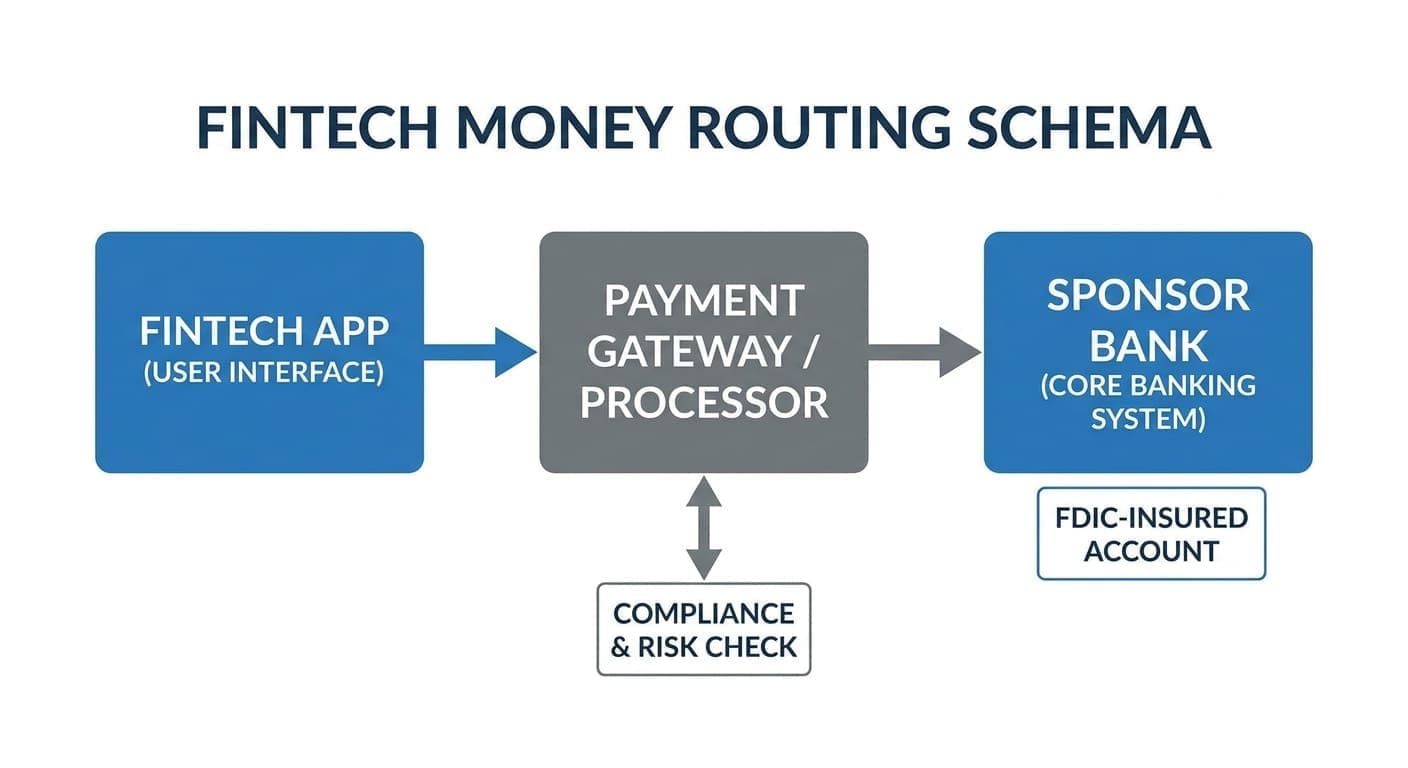
Until final approval is granted, Revolut continues to operate in the U.S. through its existing partner bank arrangement. Currently, that partner is Lead Bank, which holds customer deposits and provides the underlying banking infrastructure.
For now, your money with Revolut is held by a partner, not Revolut itself.
This is a common path for fintechs aiming to become banks. It allows them to build a customer base and refine their products while navigating the complex, multi-year regulatory process. The conditional approval is a major milestone on that journey.
The OCC’s approval is a critical first step, but it is not a banking license. Revolut cannot accept deposits or operate as a bank until all conditions are met and final approvals from multiple agencies are secured.
Which Hurdles Remain Before a 2027 Launch?
Securing the OCC’s conditional nod was a major battle, but the war for a charter isn’t over. Revolut faces a multi-agency approval process, and the next steps are just as challenging. The company is reportedly targeting a launch in the first half of 2027, which depends on clearing these hurdles.
The most critical remaining step is obtaining deposit insurance from the Federal Deposit Insurance Corporation (FDIC). Without FDIC insurance, a bank cannot legally accept customer deposits.
This is the bedrock of consumer trust in the U.S. banking system, guaranteeing deposits up to $250,000 per depositor.
The FDIC conducts its own rigorous review of the bank’s financial health, management team, and risk management policies. It will assess whether Revolut Bank US, N.A. is a safe and sound institution to entrust with public deposits.
This process runs parallel to the OCC’s review and is not a rubber stamp.
Next, Revolut must get approval from the Federal Reserve. Since the proposed U.S. bank will be a subsidiary of a foreign parent company (Revolut Ltd. in the UK), the Fed must approve the formation under the Bank Holding Company Act.
The Fed will scrutinize the global organization’s financial stability and governance.
Only after securing both FDIC insurance and Federal Reserve approval can Revolut return to the OCC for final authorization to commence operations. This entire sequence is methodical and designed to ensure the stability of the financial system.
How Will the Revolut US Charter Change Its Services?
The main difference between Revolut today and the future Revolut Bank US, N.A. is the shift from a partnership model to a direct banking model. This has massive implications for the products it can offer and the speed at which it can innovate.
Currently, Revolut partners with Lead Bank to offer banking services. This means Lead Bank holds the deposits and is the official, regulated entity behind the scenes. Revolut essentially provides the user-friendly app and technology layer on top.
This partnership model has limitations. Revolut is dependent on its partner’s capabilities and risk appetite. Launching new products, like lending, often requires complex negotiations and integrations with the partner bank, slowing down development.
Here’s the deal: With its own charter, Revolut will control its own destiny. It can directly hold customer deposits, which will be FDIC-insured under its own name. This provides a stable, low-cost source of funding that can be used for lending.
This direct model unlocks the ability to launch core banking products nationwide under one consistent regulatory framework. We’re talking about personal loans, credit cards, and potentially mortgages, all developed and managed in-house.
It allows Revolut to compete head-on with services like SoFi and Ally.
A comparison of Revolut’s current fintech-as-a-service model versus its proposed future as a fully chartered national bank.
What Are the Strict Financial Conditions Attached to the Charter?
Regulators don’t hand out bank charters without demanding a strong financial foundation. The OCC has attached specific, non-negotiable capital requirements to its conditional approval for Revolut Bank US, N.A. These are designed to ensure the new bank can withstand financial stress from day one.
First, the OCC requires the bank to have **at least $95 million** in initial paid-in capital. This is the amount of cash that must be in the bank’s coffers after all organizational and pre-opening expenses are paid. It’s a significant buffer to absorb any early losses and support growth.
Second, and perhaps more importantly, is the leverage ratio requirement. The OCC has mandated that Revolut Bank US, N.A. maintain a **tier 1 leverage ratio of no less than 10%** for its first three years of operation. This is substantially higher than the 4% required for most established banks.
What does this mean in practice? The tier 1 leverage ratio measures a bank’s core capital against its total assets. A 10% ratio means that for every $100 in assets (like loans), the bank must hold at least $10 in core capital. This high requirement limits the bank’s risk-taking in its early years.
For example, with $95 million in capital, a 10% ratio would cap the bank’s total assets at $950 million. This forces a disciplined, measured growth strategy, preventing the kind of rapid, high-risk expansion that can endanger a new institution.
It’s a regulatory safeguard to protect depositors and the financial system.
Is Revolut’s Full Vision Included in This Approval?
While the charter is a massive win, the OCC’s approval came with a notable limitation. The conditional approval explicitly **does not include** Revolut’s proposed retail foreign exchange (FX) business.
This is a significant carve-out, as multi-currency accounts and low-cost international transfers are a cornerstone of Revolut’s global brand.
This exclusion likely stems from the regulatory complexity and perceived risks associated with retail FX products. Regulators are often more cautious about activities that involve currency speculation or complex cross-border transactions, especially for a newly chartered bank.
This means that, at least initially, Revolut Bank US, N.A. will not be able to offer these FX services directly. The company may need to continue offering them through a separate entity or a partner, which could create a disjointed customer experience.
It’s possible Revolut could apply to have this restriction lifted in the future, once the bank has established a solid track record of safe and sound operation. However, for the foreseeable future, the U.S. bank will be focused on more traditional deposit and lending products.
This highlights the trade-offs involved in seeking a U.S. bank charter. While it provides immense benefits in terms of stability and product expansion, it also subjects the company to a much higher level of regulatory scrutiny and potential business limitations.
What About the Reported Revolut US Charter and Swiss Banking License Bid?
While Revolut’s U.S. ambitions are concrete and publicly documented, its plans in other major financial hubs, like Switzerland, are less clear. There has been industry chatter about Revolut seeking a Swiss banking license, which would be a logical step in its European expansion.
A Swiss license would be a prestigious addition to its portfolio, which already includes a full banking license in Lithuania that it uses to serve customers across the European Economic Area.
Switzerland is a key wealth management and private banking hub, a market that aligns with Revolut’s premium and ‘Ultra’ subscription tiers.
However, unlike the U.S. charter application filed in March 2026, there has been no official confirmation from Revolut or the Swiss regulator (FINMA) about a formal license application. For now, this remains in the realm of strategic possibility rather than a confirmed regulatory process.
The focus remains squarely on the U.S. market, which represents a massive opportunity for growth. The regulatory process there is well underway, with a dedicated CEO, Cetin Duransoy, leading the charge. The U.S. charter is the company’s most immediate and significant regulatory objective.
Pursuing licenses in multiple, highly regulated jurisdictions simultaneously is an immense undertaking. It requires dedicated legal, compliance, and capital resources for each market.
It’s likely Revolut is prioritizing the U.S. launch before committing fully to another complex application process like the one in Switzerland.
- The U.S. charter application is a confirmed, ongoing process.
- A Swiss banking license bid is unconfirmed and remains speculative.
- Revolut’s current European banking operations are based on its Lithuanian license.
- The U.S. market is the primary focus for a new, full bank charter.
How Will Revolut Stack Up Against Established US Digital Banks?
Once Revolut Bank US, N.A. launches, it will enter a crowded and competitive market. It won’t just be competing with legacy giants like Chase and Bank of America, but also with established digital-first players who have a significant head start.
Companies like Chime and SoFi have already captured millions of U.S. customers. Chime, through its partner banks, has mastered the art of simple, fee-free checking and high-yield savings. Its SpotMe feature is incredibly popular and a key differentiator.
SoFi has successfully transitioned into a fully chartered bank and built a powerful ecosystem around lending, investing, and banking. Its strategy of cross-selling student loan refinance customers into other products has been highly effective.
It offers a comprehensive suite of services that Revolut will need to match.
Revolut’s key differentiator has always been its global focus, with low-cost currency exchange and international transfers. Even with the initial charter limitations, this global DNA will be a key part of its appeal. It will likely target frequent travelers, expats, and digital nomads.
To succeed, Revolut will need to leverage its tech prowess and global brand while delivering the core products U.S. consumers expect, like a competitive net/what-is-apy/”>APY on savings, seamless payments, and compelling lending offers. It will be a tough fight, but one that will ultimately benefit consumers with more choice and better products.
Frequently Asked Questions
Is Revolut a real bank in the USA?
Not yet. As of late 2026, Revolut operates in the USA through a partner bank (Lead Bank). It has received preliminary conditional approval for a national bank charter, but still needs final approval from the OCC, FDIC, and Federal Reserve before it can operate as Revolut Bank US, N.A.
When will Revolut become a bank in the US?
Revolut is reportedly targeting a launch for its U.S. bank in the first half of 2027. This timeline is dependent on successfully obtaining all necessary regulatory approvals, including FDIC insurance.
Will my money be FDIC insured with Revolut?
Currently, funds in your Revolut account are held at its partner bank, Lead Bank, and are FDIC insured there. Once Revolut becomes a chartered bank, deposits held directly with Revolut Bank US, N.A. will be FDIC insured up to $250,000.
What is a national bank charter?
A national bank charter is a license issued by the Office of the Comptroller of the Currency (OCC) that allows a company to operate as a bank across the United States under a single, federal regulatory framework, rather than needing licenses in all 50 states.
Why was Revolut’s foreign exchange business excluded from the approval?
The OCC’s conditional approval did not include the retail foreign exchange business, likely due to the higher perceived risk and regulatory complexity of these products. Regulators often prefer new banks to start with a core focus on traditional deposits and lending before expanding into more complex areas.
What is Lead Bank’s relationship to Revolut?
Lead Bank is Revolut’s current U.S. partner bank. It provides the underlying banking infrastructure, holds customer deposits, and ensures regulatory compliance for the services Revolut offers in the U.S. until Revolut obtains its own charter.